
Mahjong Slide: Zen
Playful BytesBoard
4.7357.00 Reviews
- Version
- 1.9.0
- Installs
- 1.00M
- Age Rating
- Everyone
Screenshots
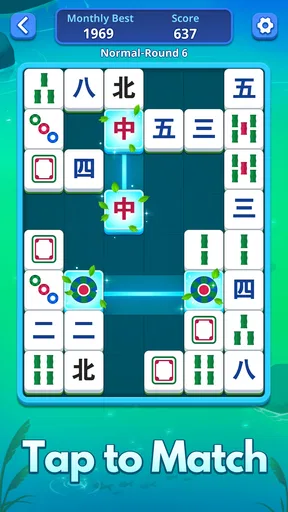
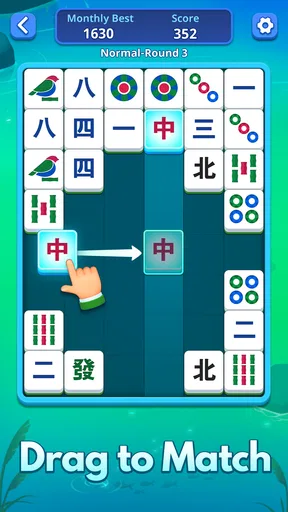


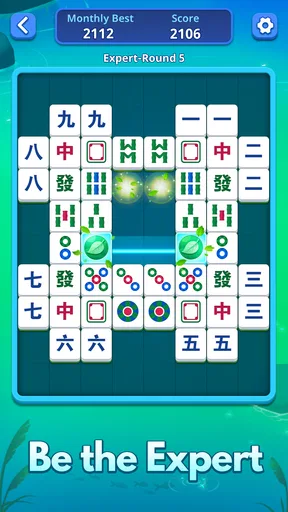
Our Review of Mahjong Slide: Zen
 Analysis by Appyee
I spent time with Mahjong Slide: Zen as a quiet board game for short breaks, and its appeal became clear quickly: it turns mahjong matching into a slower, more orderly puzzle routine. The aim is not to race an opponent or manage a complicated campaign. Instead, I look for matching tiles, make a move, and gradually clear the board while keeping my attention on what remains. That makes it a comfortable choice when I want something mentally active without the pressure found in many mobile games.
Developed by Playful Bytes, this free game sits in the board category and is suitable for Everyone. It has reached over one million installs and holds a 4.7 average from around 7.9 thousand ratings, which matches my impression that it is designed for broad, accessible play rather than a specialist mahjong audience. The current version is 1.9.0, and it runs on Android 8.0 or later. Those details matter if you are using an older phone or looking for a game that does not demand a recent device.
How I settled into the basic play loop
The simplest way to approach Mahjong Slide: Zen is to treat each board as a visual sorting task. I scan for identical tiles, choose a pair, and then reassess the arrangement created by that move. The important habit is not tapping as quickly as possible. It is pausing long enough to notice which tiles are exposed and which choices may open more useful matches later.
That distinction gives the game more thought than its relaxed presentation might suggest. A pair that is immediately visible can be tempting, but removing it may leave the board in an awkward shape. I found better results by checking the whole layout first, identifying pairs that appear to be blocking other tiles, and then starting with the move that improves visibility. This is a small change in routine, but it makes the puzzle feel more deliberate.
For an everyday example, I can imagine opening it while waiting for an appointment or taking a short break between tasks. I do not need to remember a story, coordinate with another player, or prepare a long session. I can focus on one board, stop when my attention is needed elsewhere, and return later when I want another calm challenge. It works particularly well for people who enjoy sorting, pattern recognition, and gentle concentration.
The game is also approachable for someone who has never played a traditional mahjong title. The familiar tile-matching idea is easy to understand, but the board still rewards careful observation. I did not need to learn a large rulebook before enjoying it. That low entry barrier is one of its strongest qualities, especially for families or casual players who want a board-style game rather than an action experience.
A repeatable routine makes the boards easier to read
My most useful baseline routine is a three-pass scan. First, I look across the entire board without touching anything. Second, I identify pairs that seem to restrict access to other tiles. Third, I choose a move and immediately scan again instead of continuing from memory. This prevents the common mistake of assuming the board still looks the same after several removals.
That last step is more important than it sounds. Once tiles disappear, the visual balance changes, and a pair that was hidden or easy to overlook can become the best next option. I found that treating every move as a fresh board-reading moment reduced careless taps. It also made the relaxing quality stronger because I was no longer trying to force a solution through hurried guesses.
I would not describe the game as completely mindless. The calm style lowers the pressure, but the matching decisions still require attention. If you want a board game that plays itself while you watch something else, this is probably not the right fit. The experience is better when you give the layout a few uninterrupted seconds and let the puzzle occupy your attention.
Settings and habits worth checking before settling in
One practical point is that the game should be judged as a focused puzzle rather than as a feature-heavy board platform. I recommend checking the available in-game settings before starting a serious session, especially sound and any display-related options that affect how comfortably you can distinguish tiles. I do not change settings constantly, but I prefer creating one setup for quiet play and another for situations where I need a more discreet, low-distraction session.
That is a useful distinction for mobile gaming. At home, sound can make the experience feel more complete, while in a waiting room or shared office I would rather keep the phone unobtrusive. The best configuration depends on where I am playing, not on a universal ideal. A game built around calm concentration benefits when the presentation supports the environment instead of competing with it.
I also recommend checking how the board responds to taps before trying to play quickly. With tile-matching games, a rushed finger can select the wrong piece, particularly when several symbols have similar shapes or when the layout becomes crowded. I found that using the center of a tile and waiting for the visual response creates a cleaner rhythm than sweeping across the board with repeated taps.
Players using an older Android phone should also pay attention to comfort rather than assuming that a lower minimum operating-system requirement guarantees the same experience on every device. Mahjong Slide: Zen supports Android 8.0 and later, but screen size, touch accuracy, and display brightness still influence how easy it is to inspect the board. On a smaller screen, I would slow down and rely more heavily on the three-pass scan.
The free price makes experimentation easy. I can install it without treating the first session as a commitment, which suits a game intended for casual use. At the same time, “free” does not automatically mean it will suit every player. Someone looking for competitive rankings, a deep multiplayer system, or a large narrative journey should not choose it simply because it costs nothing. Its value is in the focused matching loop.
Small shortcuts that improve consistency
I use a simple mental marking system when a board becomes busy. I do not try to memorize every tile. Instead, I remember only two or three useful pairs: one that can be removed immediately and one that may become available after another move. This reduces mental clutter and keeps the next decision manageable.
Another helpful habit is to avoid clearing a convenient pair automatically when it is not doing any strategic work. If two matching tiles are easy to reach and do not block anything, they can often wait. I first look for a move that changes the board’s access or reveals more information. This is not a complicated trick, but it separates thoughtful play from simply removing whatever catches the eye first.
When I am tired, I reverse that approach. Rather than trying to optimize every move, I choose the most obvious safe pair and use the game as a gentle concentration exercise. That makes Mahjong Slide: Zen flexible: the same board style can support careful problem-solving or a quieter wind-down session, depending on how much attention I want to spend.
I would also avoid playing with the phone held too close to the face for long periods. The game encourages close visual inspection, and that can become tiring if the session stretches beyond the kind of short break it naturally supports. Adjusting brightness, holding the device at a comfortable distance, and stopping when the board starts to blur are more useful habits than chasing a perfect run.
Where experienced play becomes faster
Speed in this game does not come from tapping faster. It comes from reducing unnecessary board scans. After a few sessions, I began grouping the layout mentally by areas rather than searching randomly. I would inspect one region, note promising pairs, move to the next, and then compare the options. This gave me a repeatable path through the board and made the game feel less visually noisy.
The strongest faster pattern is to prioritize information. A move that exposes several new possibilities is usually more valuable than one that merely removes a pair without changing the surrounding structure. When two choices look equally safe, I prefer the one that leaves the clearest next scan. It keeps the board readable and lowers the chance of overlooking a match.
I also learned not to confuse an empty space with progress. Removing tiles can feel satisfying, but the real improvement is a board that offers better choices. Sometimes a smaller move creates a more useful opening than a larger-looking clearance. This is why I would not recommend judging performance only by how quickly the layout shrinks.
For repeat sessions, I like using the same opening discipline every time: observe first, select the move with the clearest consequence, then rescan. A consistent opening makes it easier to notice where mistakes happen. If I lose track of the board, I know the problem was probably a rushed scan rather than a lack of tile knowledge.
There is also a trade-off between speed and relaxation. Faster play can be satisfying once the symbols become familiar, but it can undermine the calm atmosphere if I start treating every decision as a test. I get the best experience by using speed as a side effect of better recognition, not as the main objective.
How it compares with other board-game choices
Compared with classic digital solitaire, Mahjong Slide: Zen feels more visual and spatial. Solitaire asks me to manage sequences and card availability, while this game asks me to recognize patterns across a tile layout. I prefer Mahjong Slide: Zen when I want a board that can be understood at a glance but still rewards planning several moves ahead.
Compared with competitive board games, it is much less demanding socially. There is no need to wait for another player, learn an opponent’s style, or protect a ranking. That makes it better for private, low-pressure sessions, but worse for anyone who wants conversation, bluffing, or the satisfaction of outplaying a human rival.
Traditional mahjong apps can offer a fuller rule-based experience with multiple players, scoring, and a stronger connection to the original table game. Mahjong Slide: Zen is not a replacement for that kind of title. Its strength is that it simplifies the idea into matching and board management. If you want authentic mahjong rules, look elsewhere; if you want an accessible tile puzzle, this approach is easier to enter.
It also differs from fast match-three games. There is less emphasis on chain reactions, timed pressure, or rapid combinations. I found it more suitable for winding down, while a match-three game may be better when I want quick stimulation. Choosing between them depends on whether I want calm visual reasoning or immediate arcade energy.
Limits that become clearer with regular play
The same simplicity that makes the game approachable can eventually feel restrictive. Players who need constant novelty, elaborate progression, or a strong sense of long-term achievement may find the central matching loop too narrow. I enjoyed returning to it, but I would not expect it to replace a larger strategy game or a competitive board collection.
Its relaxed identity may also be a weakness for people who need strong external motivation. There is a difference between a game that invites another peaceful puzzle and one that pushes me toward a clear goal. Mahjong Slide: Zen works best when I supply my own reason to play, such as taking a break, sharpening observation, or enjoying a quiet routine.
Visual fatigue is another realistic limitation. Tile puzzles depend on distinguishing symbols, and extended sessions can make similar shapes harder to read. I would skip it if small visual details are uncomfortable on your phone, or if you are looking for a game that can be played mostly by sound. The board is the experience, so screen comfort matters.
I would also skip it if your main requirement is multiplayer interaction. The game’s appeal is personal concentration, not shared competition. A traditional online mahjong table or a social board-game app would be a better choice for players who want opponents, conversation, or live decision-making.
Even so, the limitations feel consistent with the design rather than surprising flaws. Playful Bytes appears to have focused the experience around a calm board puzzle, and that focus is exactly why it is easy to pick up. The question is not whether it does everything; it is whether this particular type of quiet matching is what you want from a mobile game.
Who should download it and who should pass
I would recommend it to people who enjoy tile puzzles, visual sorting, and short sessions that do not require a tutorial-heavy commitment. It is especially suitable for players who want a peaceful alternative to action games, or for anyone who likes turning a few spare minutes into a small concentration exercise.
It is also a sensible choice for families because the Everyone age rating and straightforward board concept make it approachable. I would still encourage younger players to take breaks from close-screen play, but the game itself does not rely on frightening themes or complicated competitive systems. Its accessibility is one of the reasons the broad install base makes sense.
I would pass if you are searching for a deep mahjong simulation, a story-driven adventure, or a game with a strong social layer. I would also look elsewhere if you dislike repeating a familiar puzzle structure. The calm presentation cannot hide the fact that the core activity remains tile matching, and that will either be pleasantly focused or too limited depending on your taste.
Before deciding, I would ask myself one practical question: do I want the phone to entertain me, or do I want it to give my attention a gentle place to settle? Mahjong Slide: Zen is much closer to the second option. That makes it a poor choice for restless, high-energy moments but a good companion for a quiet pause.
My verdict after building a steady routine
Mahjong Slide: Zen succeeds because it understands the value of restraint. I can open it, read a board, make a few considered matches, and stop without feeling that I have abandoned a complicated system. The game’s free availability, Everyone rating, broad device support from Android 8.0 onward, and current 1.9.0 release make it easy to try, while its 4.7 average from roughly 7.9 thousand ratings suggests that many players respond well to the same calm formula.
My recommendation comes with a clear condition: choose it for focused tile matching, not for a complete traditional mahjong simulation. The best results come from using a repeatable scan, prioritizing moves that reveal information, checking the settings for your surroundings, and accepting that a slower decision can be the smarter one. Those habits make the game more satisfying without pretending it is more complex than it is.
After regular play, I see it as a useful little board game for waiting rooms, quiet evenings, and short mental resets. It will not satisfy everyone, particularly players who need competition or constant progression. For me, though, its narrow purpose is a strength. If you want a calm puzzle that rewards attention without demanding a major time commitment, this is an easy one to recommend.
Verdict
Strengths of Mahjong Slide: Zen
- Relaxing gameplay suitable for short breaks or longer sessions.
- Simple controls make it easy for beginners to start playing.
- Gradually challenging levels help maintain interest over time.
- Zen-inspired presentation creates a calm, low-pressure atmosphere.
- Offline play is convenient when you have no internet connection.
Limitations of Mahjong Slide: Zen
- Repetitive mechanics may become dull after extended play.
- Some puzzles can feel more luck-based than skill-based.
- Limited variety may disappoint players seeking deeper strategy.
- Ads may interrupt the experience, depending on the version.
- Progression can feel slow without optional purchases or rewards.
Other Releases by Playful Bytes
View All
Take Off Bolts: Screw Puzzle
Puzzle4.1

Match Family: Triple Match 3D
Casual4.7

Mahjong Mingle
Board4.8

Find Hidden Cats- Spot it!
Casual4.8
Similar Picks in This Category
View All
Ludo King®
Gametion4.1

Ludo
Yarsa Games4.6

Tile Master® - Matching Game
Higgs Studio3.6

Checkers Online
CC Games4.6

Dominoes
Loop Games4.7

Chess
Chess Prince4.6
Frequently Asked Questions
What is Mahjong Slide: Zen, and how is it played?
Mahjong Slide: Zen is a relaxing tile puzzle game built around matching and sliding mahjong-style pieces. Instead of focusing on traditional four-player mahjong rules, the game challenges you to clear tiles from carefully arranged boards by finding valid pairs or making strategic moves. Its simple controls make it easy to start, while increasingly complex layouts require planning and patience.
Is Mahjong Slide: Zen suitable for beginners?
Yes, the game is generally approachable for beginners because its core mechanics are easy to understand and the pace is designed to feel calm rather than stressful. Early levels usually provide a gentle introduction to matching and sliding tiles. However, later puzzles may require more careful observation, since an incorrect move can block useful tiles or reduce your available options.
Does Mahjong Slide: Zen require an internet connection?
Mahjong Slide: Zen may allow at least some puzzle sessions to be played offline, which is convenient when traveling or when you do not have reliable mobile data. Nevertheless, features such as advertisements, cloud synchronization, updates, rewards, or other online services can require a connection. It is best to check the store listing and test offline access after installation.
Is Mahjong Slide: Zen free to download, and does it contain advertisements or in-app purchases?
The game is typically available as a free download, but free access may be supported by advertisements and optional in-app purchases. Ads can appear between levels or during certain bonus activities, while purchases may offer cosmetic items, extra hints, ad removal, or other conveniences. Before downloading, review the current Google Play or App Store listing for exact pricing and purchase details.
What makes Mahjong Slide: Zen different from traditional Mahjong games?
Mahjong Slide: Zen is primarily a casual single-player puzzle experience, not a traditional Mahjong game played against opponents. Its emphasis is on relaxing tile arrangements, matching, sliding, and solving progressive levels rather than betting, scoring hands, or following the complete rules of competitive Mahjong. Players looking for a quiet brain-training game may enjoy it, while traditionalists may prefer a rules-based Mahjong app.
Play our best games!


